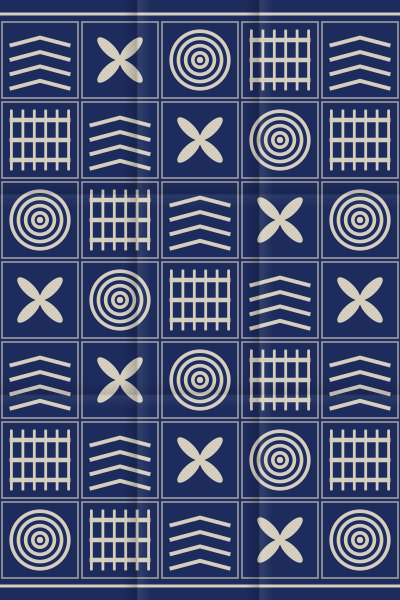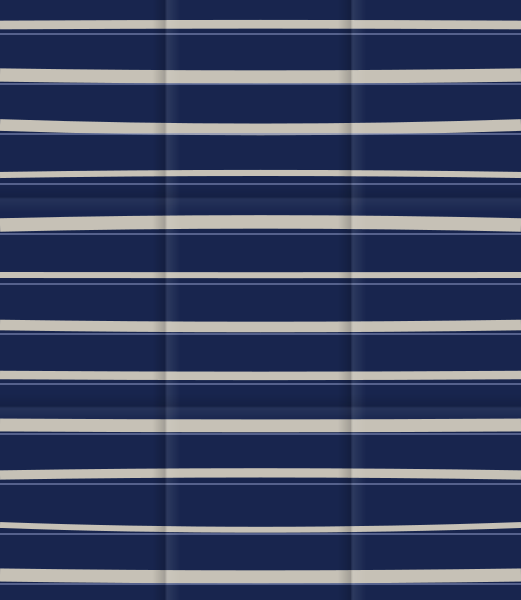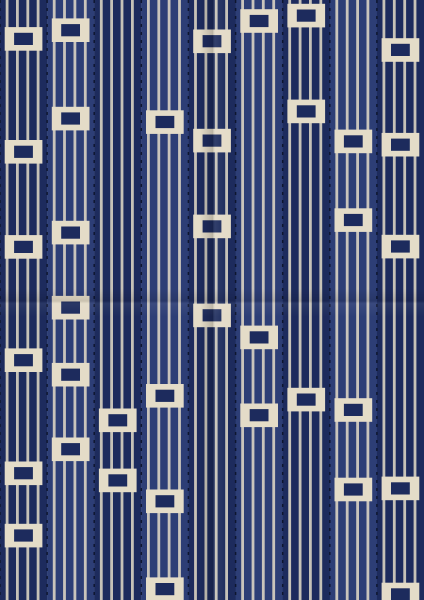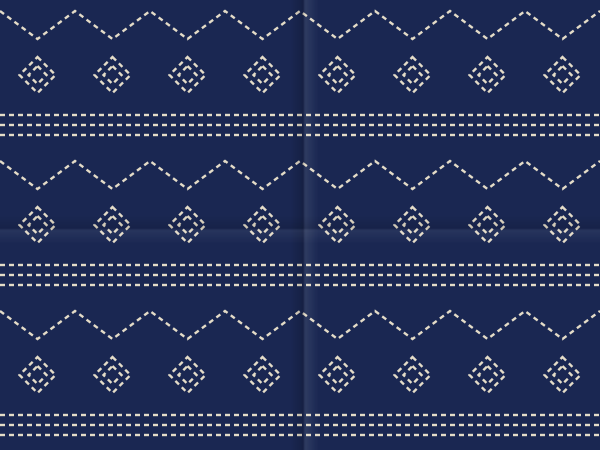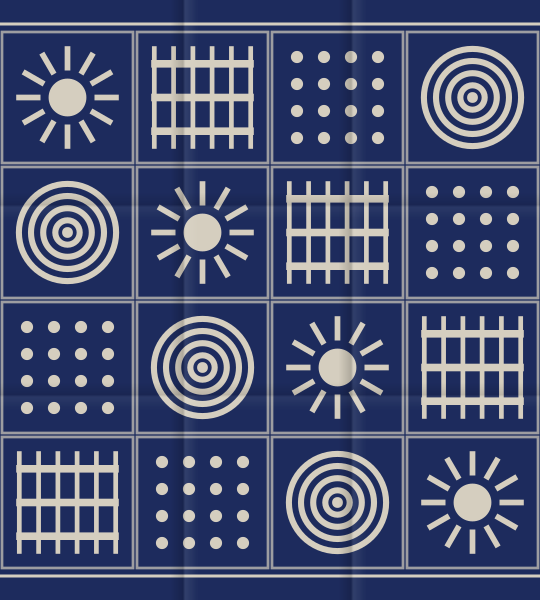
Unrecorded dyer (Yoruba, Abeokuta or Ibadan)
Adire eleko wrapper with a starch resist ground of squares, about 1955
Hand painted cassava starch resist, indigo on cotton. 200 x 180 cm.
Example estimate ₦900,000 to ₦1,300,000
The evening sale is on view in Maitama from Thursday 12 November. Walk in, no appointment needed.
Catalogue
10 lots, each with a full entry and an example estimate. Read them here, view them in Maitama, then bid in the room, by telephone or online.
Saturday 28 November 2026, 2pm
The saleroom, Maitama, and online.
Viewing from Saturday 21 to Friday 27 November, 10am to 6pm.
Register to bidTen cloths, most of them made between 1940 and 1975 in Abeokuta and Ibadan, where women dyers painted cassava starch onto cotton, tied it with raffia or stitched it before it went into the indigo. Two strip cloths come from looms further north, and one robe panel was dyed and beaten at the pits in Kano.
Two lots are new: Uchenna Eze-Martins works with the same starch and the same vats on silk and heavier cotton. We think the old cloths and the new ones read each other well, and we have hung them that way in the viewing room.
Morenike Alade, head of textiles (example person).

Example estimates for the whole sale: ₦10,450,000 to ₦15,500,000.
Unrecorded dyer (Yoruba, Abeokuta or Ibadan)
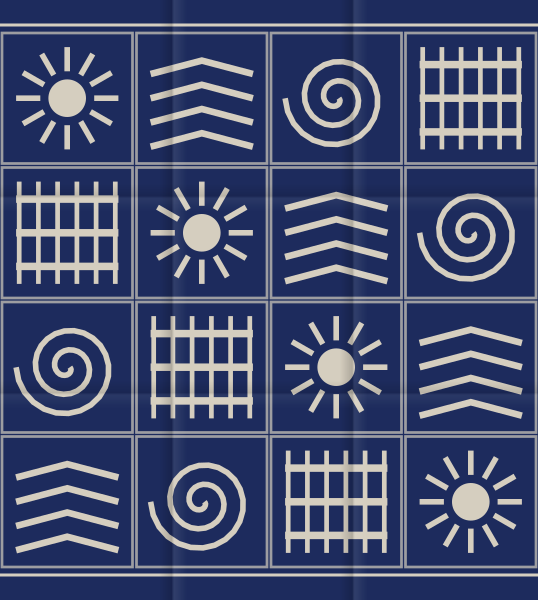
Adire eleko wrapper with a starch resist ground of squares, about 1955
Hand painted cassava starch resist, indigo on cotton. 200 x 180 cm.
Example estimate ₦900,000 to ₦1,300,000
Unrecorded dyer (Yoruba, Abeokuta or Ibadan)
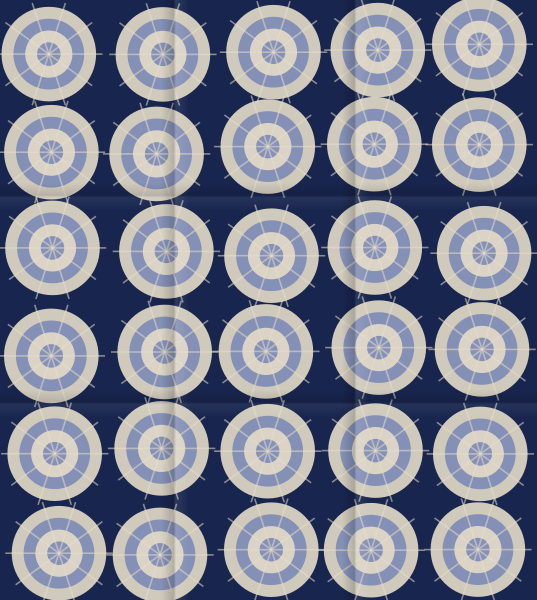
Adire oniko cloth with tied rings, about 1965
Raffia tied resist, indigo on cotton. 190 x 170 cm.
Example estimate ₦600,000 to ₦900,000
Unrecorded dyer (Yoruba, Abeokuta or Ibadan)
Adire eleko wrapper with a stencilled border, about 1960
Stencilled starch resist on cotton. 195 x 175 cm.
Example estimate ₦1,100,000 to ₦1,600,000
Unrecorded dyer (Yoruba, Abeokuta or Ibadan)
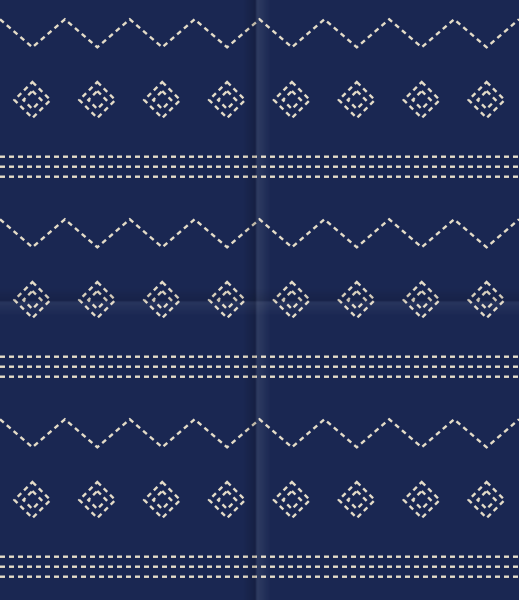
Adire alabere cloth with stitched lines, about 1970
Machine stitched resist, indigo on cotton. 185 x 160 cm.
Example estimate ₦500,000 to ₦800,000
Unrecorded dyer (Yoruba, Abeokuta or Ibadan)
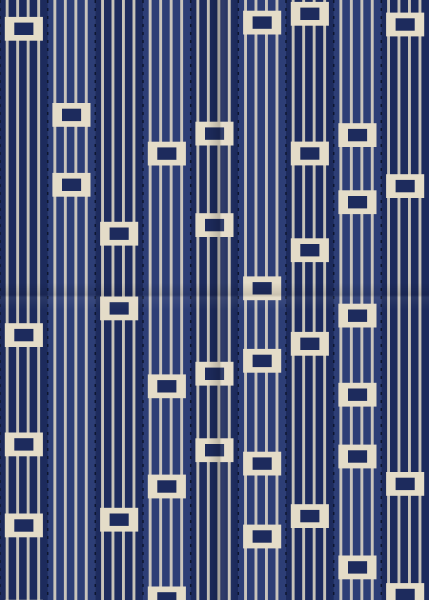
Woven strip cloth in indigo and white, about 1950
Hand woven cotton strips, sewn edge to edge. 210 x 150 cm.
Example estimate ₦1,400,000 to ₦2,000,000
Unrecorded dyer (Yoruba, Abeokuta or Ibadan)
Indigo dyed robe panel, Kano dye pits, about 1940
Indigo dyed and beaten cotton. 160 x 140 cm.
Example estimate ₦2,000,000 to ₦3,000,000
Uchenna Eze-Martins (Nigerian, born 1991, example artist)
Cloth for a Daughter, 2023
Starch resist and indigo on silk. 180 x 120 cm.
Example estimate ₦1,200,000 to ₦1,800,000
Unrecorded dyer (Yoruba, Abeokuta or Ibadan)
Adire oniko with folded stripes, about 1975
Folded and tied resist, indigo on cotton. 190 x 165 cm.
Example estimate ₦450,000 to ₦700,000
Unrecorded dyer (Yoruba, Abeokuta or Ibadan)
Two strip cloth wrapper with a weft float pattern, about 1960
Hand woven cotton. 205 x 145 cm.
Example estimate ₦800,000 to ₦1,200,000
Uchenna Eze-Martins (Nigerian, born 1991, example artist)
Night Market, Indigo, 2024
Stitched resist and indigo on cotton. 150 x 200 cm.
Example estimate ₦1,500,000 to ₦2,200,000
Every lot is sold as it is, with its condition described as honestly as we can. Ask for a condition report and we send close photographs and notes from our conservator within one working day.
The buyer pays the hammer price plus a buyer's premium of 25 percent up to ₦10,000,000 and 20 percent above, with VAT at 7.5 percent on the premium. Example rates for this demo; the lot pages work the sum out for you.
Viewing from Saturday 21 to Friday 27 November, 10am to 6pm. Walk in during viewing hours: Monday to Saturday 10am to 6pm, Sunday 1pm to 5pm during viewing weeks.
11 Iroko Close, Maitama, Abuja (example address). Parking in the close and on Iroko Crescent; drivers can wait in the shade at the back gate.
Most are sound cotton with small repairs, described lot by lot. Ask for a condition report and we will send close photographs of every corner and seam.
You can, but we would not wear a cloth from 1950. Hanging out of direct sun, rolled not folded, will keep the indigo for another lifetime.
That the woman who made the cloth was not written down when it was sold. We give the town and the date we can support, and say when we are not sure.
The front desk
Vablus Sales & Assist, demo
Receivly demo
Paying Ochre House
₦0
Card Example card ending 0000
Expiry 12/30
Name Example collector
Bank Example Bank
Account 0000000000
Account name Ochre House Receivly
No money moves in this demo. Example details for this demo.